


Office Furniture for San Diego Startups and Small Businesses: What to Buy First (Budget Guide)
Updated: Feb 23
Every startup founder I've worked with in San Diego has the same conversation with me at some point: they just signed a lease, they need to move in within a few weeks, they have a budget that feels too small, and they don't know where to start. The biotech company in Sorrento Valley, the marketing agency in Encinitas, the SaaS team in Carlsbad, different industries, same problem.
After helping dozens of these companies furnish their first real office, I've learned that most startups waste money in the same three places and underinvest in the same two. Use this office furniture budget guide to learn how to avoid both.
Spend real money on chairs. Seriously.
This is the advice nobody wants to hear because chairs aren't exciting. But your team sits in them for eight hours a day, and a $150 Amazon chair will cause back pain within six months. I've watched startups buy cheap chairs, deal with complaints for a year, then replace every single one, spending more than if they'd bought commercial-grade chairs from the start.
You don't need $1,200 Herman Miller Aerons. A good commercial task chair in the $400 to $700 range will last a decade, adjust properly to different body types, and hold up under daily use. That's $40 to $70 per year. The cheap chair you're replacing every 18 months costs more per year and makes your team miserable in between.
When I spec chairs for startups, I'm looking at three things: does it have enough adjustability to fit different people (because startup teams share desks), is the mesh breathable (this is San Diego, your office gets warm), and will the manufacturer still be around in five years if something breaks. That narrows the field fast.
Your desks matter less than you think, at first
I've seen founders agonize over desks when they should be spending that energy on chairs and conference room setup. In the early days, a clean, functional, commercial-grade desk is all you need. Nobody visiting your office is going to inspect your desk surfaces. They will notice if your chairs look cheap, your conference table wobbles, or your reception area feels like a dorm room.
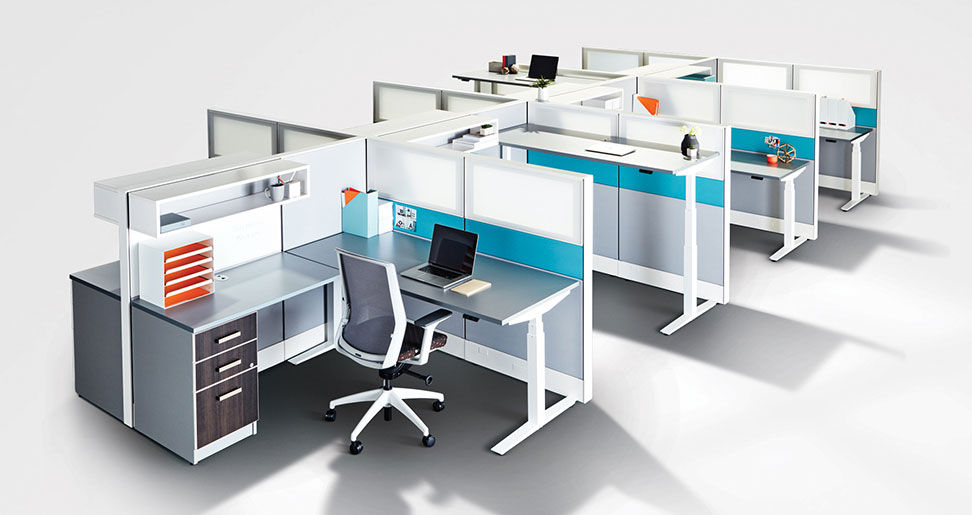
For open-plan setups, benching systems give you the most workstations per square foot and make it easy to add seats as you hire. A 10-person benching layout costs less than 10 individual desks and takes up about 30 percent less floor space. If your budget allows, start with height-adjustable desks. San Diego's workforce expects them, especially in tech, and it's cheaper to buy them now than to retrofit later.
For private offices, a standard 60-inch rectangular desk with a mobile pedestal for storage covers most founders and executives. Skip the L-shaped desk until you actually need the extra surface area. Most people don't.
The conference room is your highest-ROI investment
This is where most startups underinvest, and it's a mistake. Your conference room is where you interview candidates, pitch clients, meet investors, and make decisions with your team. It gets more use per square foot than any other room in your office, and it forms impressions that matter.
You need a solid table that doesn't wobble, comfortable chairs that people can sit in for an hour without fidgeting, and clean cable management so your video calls don't have a rats nest of wires in the background. That's it. You don't need a $15,000 boardroom. A well-chosen table with decent conference chairs and a credenza for storage will run $3,000 to $6,000 for a six-person room and look completely professional.
If you take one meeting a month with an investor, a client, or a potential hire, and that room helps close even one of those conversations, it's paid for itself many times over.
What you can skip in the beginning
Reception furniture. If you don't have a receptionist and visitors rarely drop in unannounced, a basic bench or a couple of guest chairs near the entrance is fine. A full reception station with a desk, lounge seating, and a coffee table can wait until you're client-facing regularly.
Lounge and breakroom furniture. A simple table and a few chairs in the breakroom is all you need when your team is under 15 people. The Instagram-worthy lounge with modular sofas and café seating can come later when the team is big enough to actually use it.
Storage furniture. Startups generate far less paper than established companies. A mobile pedestal under each desk and one shared filing cabinet will handle most early-stage teams. Don't buy a wall of lateral files you won't fill for two years.
Plan for the office you'll have in 18 months, not just today
The most expensive furniture mistake startups make is buying stuff that can't grow with them. A custom built-in desk system looks great until you hire five people and realize you can't add workstations without ripping it out. Heavy, fixed furniture becomes a problem when you need to reconfigure for a new team structure.
Choose freestanding desks and tables over built-ins. Use benching systems that accept additional stations. Buy mobile storage that can move when people move. Pick chairs that stack or nest if you need to clear a room for an all-hands meeting. Startups change fast, and your furniture should be able to keep up without requiring a new purchase order every time someone gets hired.
What it actually costs
The honest answer depends on your stage. For a bootstrapped team of five to ten people, plan for $1,000 to $1,500 per person and focus on good chairs, functional desks, and one solid conference setup. For a funded startup that needs to look established and attract talent, $2,500 to $4,000 per person gets you a professional office with quality seating throughout, a proper conference room, and a basic reception area. Beyond that, you're into premium territory, $5,000+ per person for high-end finishes, height-adjustable everything, and designed collaboration spaces.
These numbers include delivery and installation. They don't include AV equipment, window treatments, or coffee machines, just furniture.
A note about buying from Amazon, Costco, or IKEA
I'm not going to pretend commercial furniture is the only option. If you're three people working out of a flex space and you need desks tomorrow, an IKEA run gets the job done.
Where it falls apart is scale and durability. Consumer furniture isn't built for commercial use, the frames are lighter, the mechanisms are cheaper, and the warranty assumes residential wear. A startup with 10 people using IKEA desks and chairs will start seeing failures within a year. The bigger issue is what it signals to the people you're trying to impress. Experienced hires, investors, and clients have been in enough offices to spot consumer furniture immediately, and it tells a story you probably don't want to tell.
How we work with startups
We do free space planning for every project, meaning we'll measure your space, create a layout, and recommend specific products before you spend a dollar. Most startups don't need a designer. They need someone who's furnished enough offices to know which products hold up, which ones ship fast, and which ones are a waste of money at your stage. That's what we do.
If you're signing a lease in San Diego and starting to think about furniture, reach out. We'll give you a realistic budget estimate and a plan that makes sense for where you are now and where you're headed.


Comments